InferenceGenesis

Build a language model from nothing, on the machine you already own.

Not a course about artificial intelligence. A course where you build one โ€” in an afternoon, for nothing, with no account to make and nothing to install. You click through five steps in a program, and nine short films walk beside you.

Create Your AI, and Own It.

Free ยท no sign-up ยท no programming ยท runs on an ordinary Mac ยท nothing leaves your machine

What you will actually have

A real model. Yours. Not a demonstration.

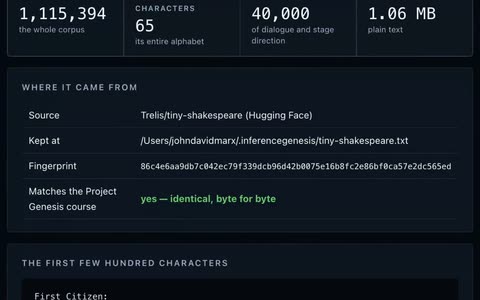
Every figure on this page was measured on the model this course teaches you to build โ€” not estimated, not borrowed from a paper. You will produce the same numbers, and you should check them.

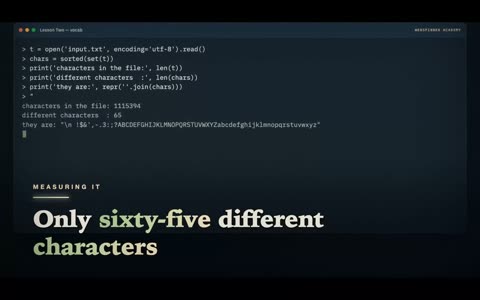
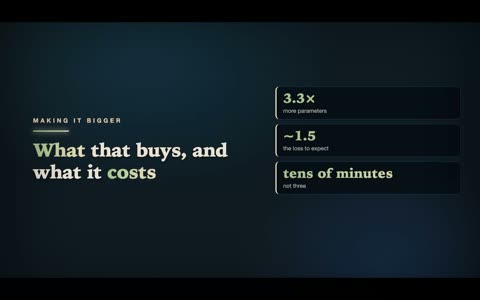
1,115,394characters of Shakespeare it reads
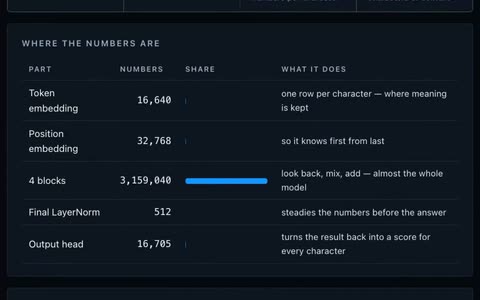
3,225,665numbers you train, one at a time
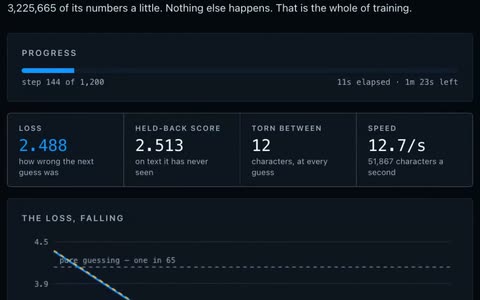
1m 36sto train it on a laptop
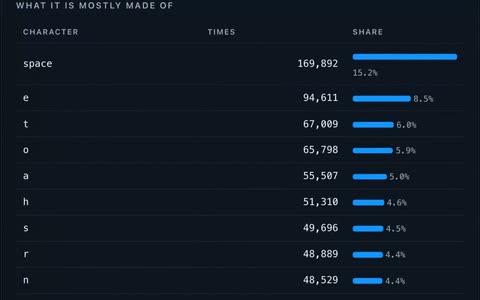
65characters it chooses between
$0to run, now and later
An image split in two: weavers smashing a loom in 1811 beneath a banner reading NO MACHINES OUR LIVELIHOODS, and students today laughing over a laptop beside a blackboard listing AI for clean energy, better health, fairer communities.

Why we are doing this

Nobody built them a bridge.

In 1811 the weavers of Nottingham did the arithmetic and it said their trade was finished. It was. Their craft died, the cloth got cheaper, the country got richer โ€” and not one of them was ever made whole.

Their mistake was reaching for the only lever they had, which happened to be a hammer. The larger mistake belonged to everybody else.

Same human spirit. Different tools.

We would rather not repeat it. Retrain people before the job goes. Share what the machine makes. Protect the person rather than the job title. Those take governments and employers โ€” but there is a fourth answer that needs nobody's permission, and it is this course.

Watch the argument in full →

The course · nine films · 13 minutes

Five steps, one window, no typing

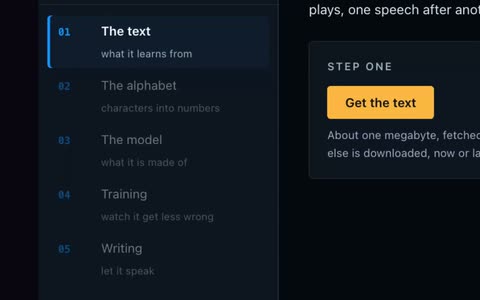
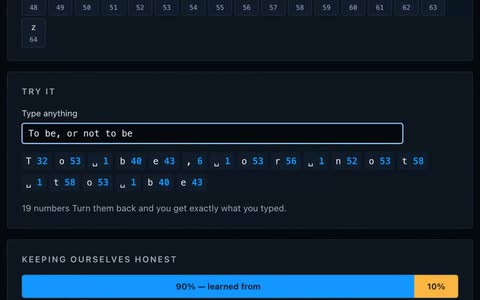
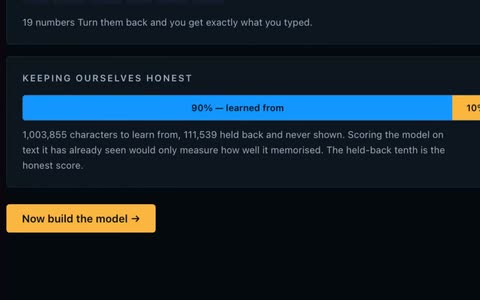
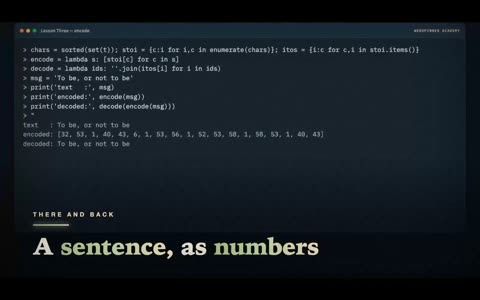
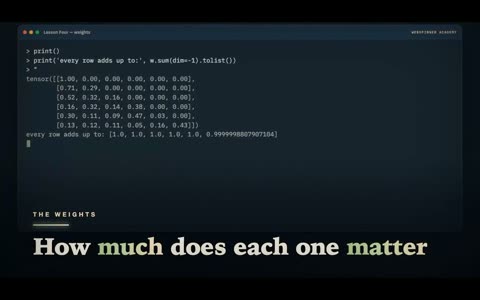
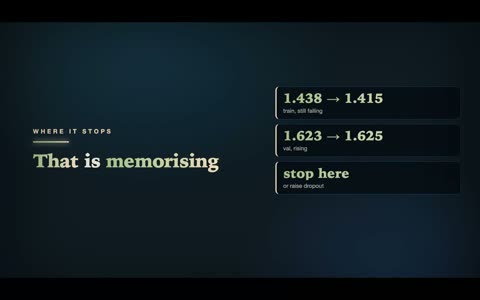
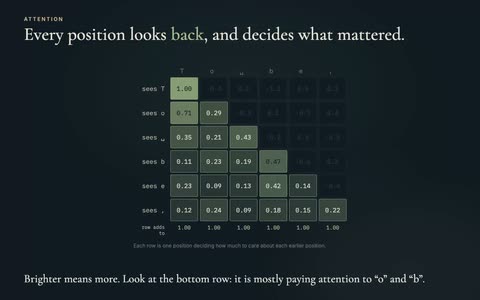
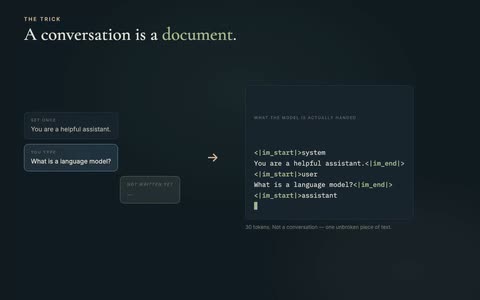
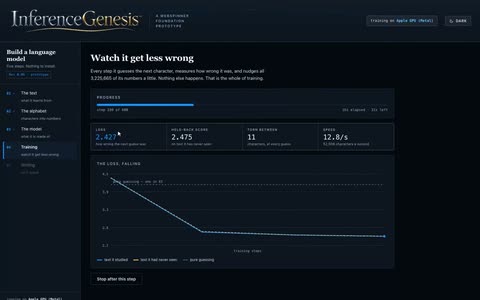
This is the way in, and it is the one almost everybody should take. Get the text. Turn its characters into numbers. Build the model. Train it, and watch the number fall in front of you. Then let it write. Nine short films walk you through the program a step at a time, with the camera close enough to read every number it produces.

You do not need to program, and there is nothing to install. You will still finish holding a real language model that you made.

Genesis for Geeks · eleven films · 28 minutes

The same model, under the hood

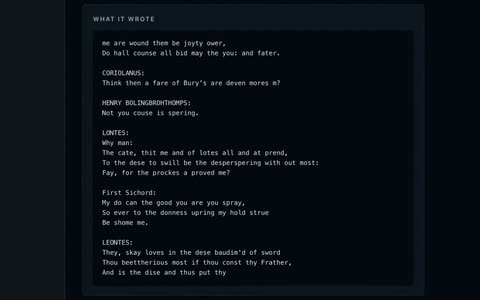
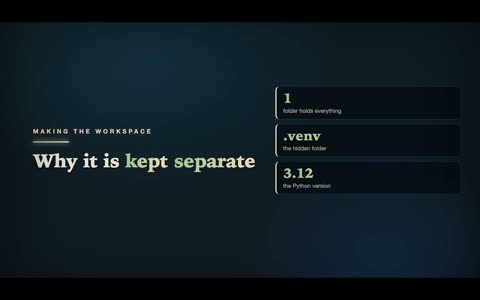
If you would rather see the machinery, take the original course: the whole thing built from an empty folder at the command line, in one file of Python you type yourself. Four commands to set the machine up, a megabyte of Shakespeare, a tokeniser, attention, four blocks, three minutes of a number falling, and a page of verse your own laptop wrote.

Nothing here is harder than the program โ€” it is the same five steps with the lid off, and every command is on a page you can copy. The two courses finish in exactly the same place.

The application

InferenceGenesis โ€” the course, made executable

Five steps down the side of one window: get the text, turn it into numbers, build the model, train it, let it write. Three Python services doing the work and a small Rust gateway holding them together โ€” the same architecture the lessons teach, running on your own graphics chip rather than somebody's server.

It is a prototype the Webspinner Foundation expects to release later this year. The nine Deep Dive films are recordings of it working.

The InferenceGenesis mark โ€” a sapling rising from an open book against a globe, ringed with light

Who is behind this

A 501(c)(3), funded by the people it serves

Project Genesis is published by the Webspinner Foundation, a 501(c)(3) not-for-profit serving the Silicon Forest from Portland, Oregon. The Foundation exists to democratise artificial intelligence โ€” on the view that the surest way to see the technology used well is for ordinary people to own theirs outright rather than rent it.

We are funded by our community. Not by advertising, not by selling what you do here, and not by a subscription that turns this course into a hostage. There is no account to make on this site, because we do not want your details.

Free, and meant it

Every film, every command sheet and the application itself, at no charge. There is no upgrade tier behind any of it.

Nothing leaves your machine

The corpus is fetched once and kept. Training runs on your own hardware. We could not read your work if we wanted to.

Community funded

Supported by patrons and by the Foundation's own work, so the teaching answers to the people learning from it.

The Webspinner Foundation →

How the software is licensed

A nosource project

Open source solved freedom. Four decades of it gave the world a commons that nearly everything now stands on, this course included โ€” Python, PyTorch, the corpus, the tooling. We are standing on that work and we are grateful for it.

What open source never solved is sustainability: it protects your freedoms and explicitly permits charging for the software, which left maintainers holding the bill. nosource is the Webspinner movement's answer. Software is released free of charge โ€” zero licence fee, ever โ€” under the nosource agreement, and the paid value moves to people: registered providers whose hourly rates are published before you engage them.

To be precise about it, because the distinction matters: the nosource agreement is a novel licence, currently in draft. It is not an OSI-approved open-source licence and we do not describe it as open source. Open source permits charging for the software; nosource fixes the price of the software at zero and pays the humans instead.

Read the agreement and the argument at nosource.ai →

The movement

This course does not stand on its own

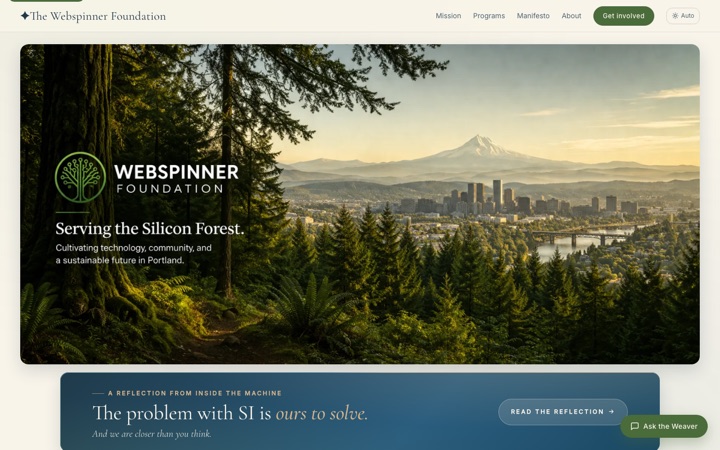
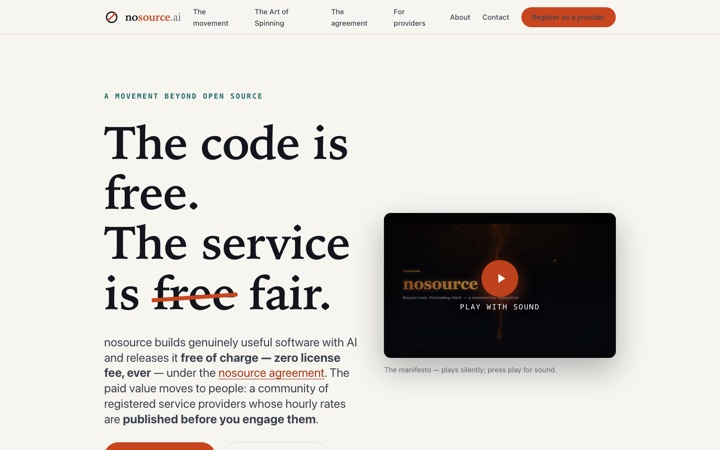
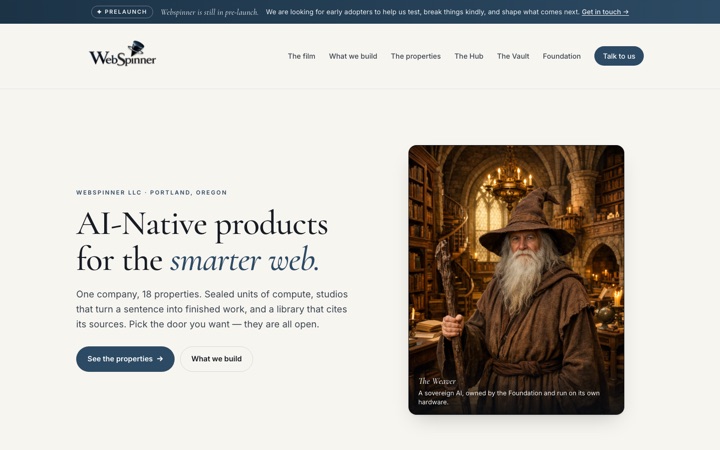
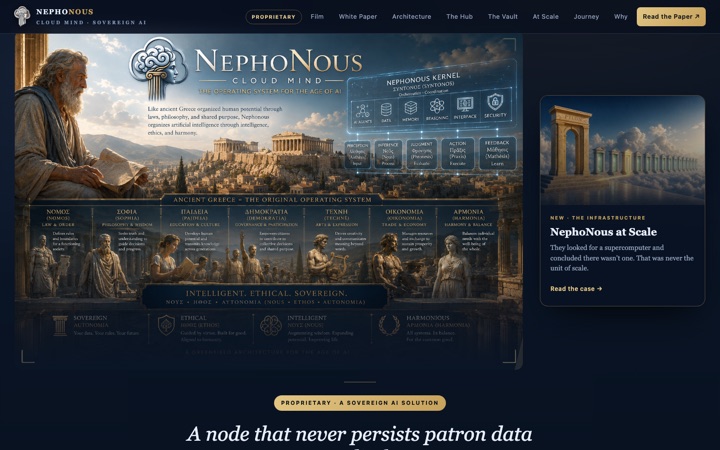
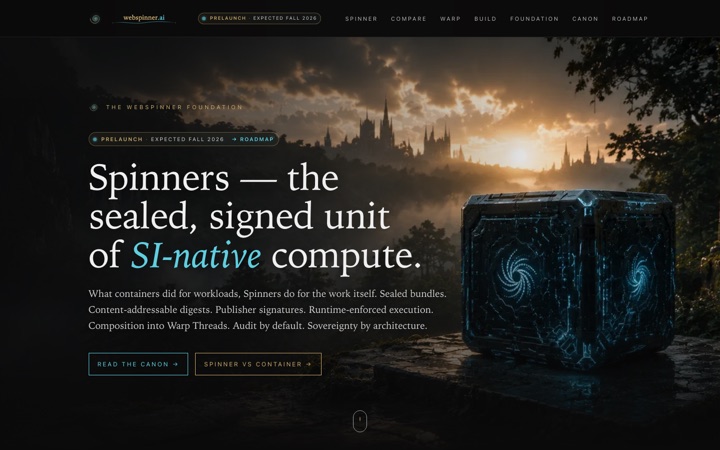
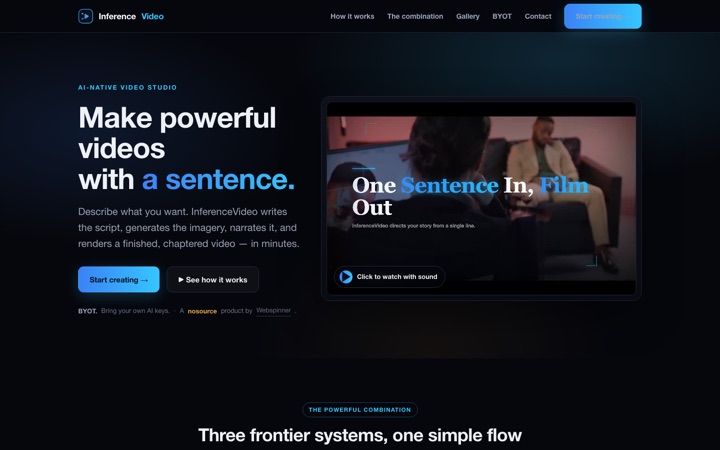
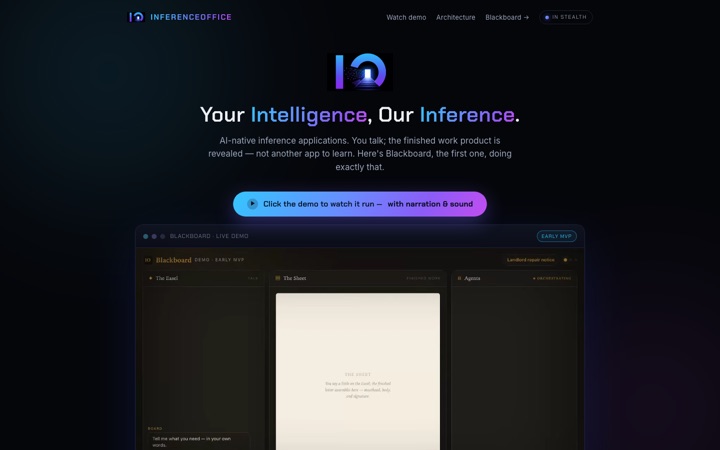
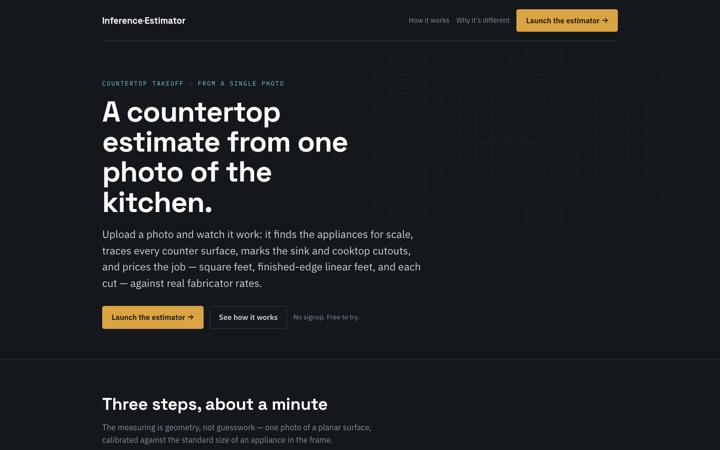
Every description below is the property's own, read from its live page on 20 September 2026. Each placard is a screenshot taken the same day โ€” not artwork, not a mock-up. If a page looks unfinished in the picture, that is because it is.

In the open

We are in prelaunch, and we are showing you anyway

Webspinner is in prelaunch. Every property below is marked MVP in our own register โ€” not one of them is a proven production release, and several are a good idea with a real page in front of it. We know the difference. We would rather tell you than let you find out.

We are doing it the way the open source movement did it: build in the open, show the work at whatever stage it has actually reached, and let people judge for themselves. A movement does not bootstrap from a press release. It bootstraps from something you can click on, poke at, and disagree with.

What you can rely on today is this course. It is finished, it is free, and every number it puts on screen was measured rather than asserted. The rest is on its way โ€” and you are welcome to watch it arrive, and to tell us when we get it wrong.

The record

Everything we built, and when

The Webspinner Journey is a chronology of every project in the estate on one timeline โ€” swim lanes by what a thing is, colour by how far it got. Assembled from git history, the repository index and a live probe of every address. Measured, not remembered.

65projects
29live sites
9in production
21at MVP
7months

Open the Webspinner Journey →

Get in touch

Tell us what you built

We read everything. If you finished the course, we would genuinely like to know โ€” what you trained it on, what it wrote, and where it fell over. If you teach, or you want to help, or you think we have something wrong, that is just as welcome.

You will get a one-click confirmation email, so we know the note really came from you. Nothing else is done with your address.

We read everything. The server replaces this line once your note is away.